 Major changes are on the horizon for the UK’s supported housing sector, and it is hoped that reforms will improve outcomes for people experiencing homelessness. With the introduction of the National Supported Housing Standards, the Renters’ Rights Act, Awaab’s Law, and new funding commitments, providers across the country are preparing for a more regulated, more accountable, and ultimately more person‑centred system.
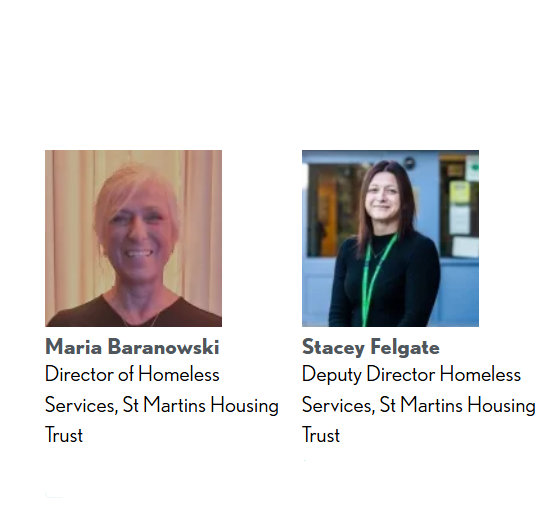
At a recent Westminster Insight conference, St Martins’ Director and Deputy Director of Homeless Services, Maria and Stacey, brought more than 40 years of combined experience to the national conversation. Their session focused on housing people with experience of rough sleeping and the realities of delivering high‑quality supported housing in a system under pressure.
What is supported housing?
Supported housing provides safe accommodation with on‑site or visiting support, helping people who cannot yet live independently. For people experiencing homelessness, it offers stability, tailored support, and a pathway to long‑term independence.
Housing First and Trauma‑Informed Practice
St Martins has delivered a Housing First model since 2013 focusing on the primary need for housing, and wrapping trauma-informed support around the individual. (Housing First means the old-fashioned reward model is abolished – i.e. you must engage before we help you… you must show positive behaviours then you can be housed ) Housing First is particularly effective for people facing repeated homelessness and complex needs, especially where shared housing has failed. It ensures we keep the individual at the centre and avoids punitive responses to setbacks.
Maria said, “One of our biggest challenges is managing the expectation of other providers about what kind of or level of support we can provide. We often find ourselves trying to support people whose needs and risk far exceed our capacity to manage safely. This can be as a result of misunderstanding or unfortunately taking advantage of the supported housing model.”
The role of temporary accommodation
Temporary accommodation, is just that – it is a place of safety where needs can be identified but not always met onsite. This requires proactive and consistent support from a wider system that can pick up on different strands of support. Without move‑on options, temporary accommodation becomes long‑term by default — compounding trauma and increasing the risk of eviction or abandonment.
Looking Ahead
The sector is entering a period of significant change. Licensing, national standards, and new legislation promise higher quality and greater accountability. But as Maria and Stacey made clear, reform must be matched with resources, clarity for local authorities, and a commitment to partnership working.
Maria said, “There were lots of informed and knowledgeable speakers, largely positive and optimistic about the changes in legislation… but some cautionary words around remaining risks and concerns that are yet to be defined.”
St Martins will continue to champion person‑centred, trauma‑informed, collaborative approaches — ensuring that people experiencing homelessness receive not only a roof, but the support, dignity, and stability they need to rebuild their lives.